
Last updated October 30, 2026
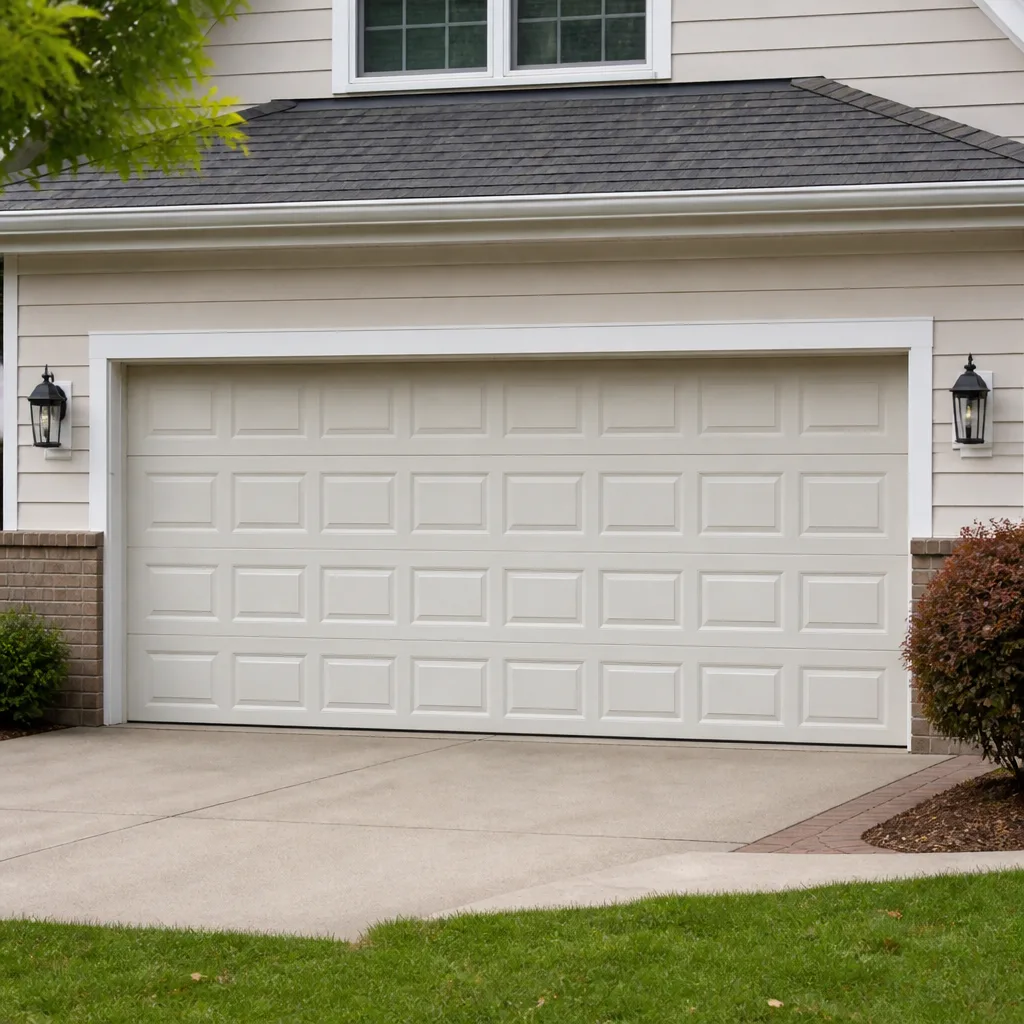 Raised-panel steel
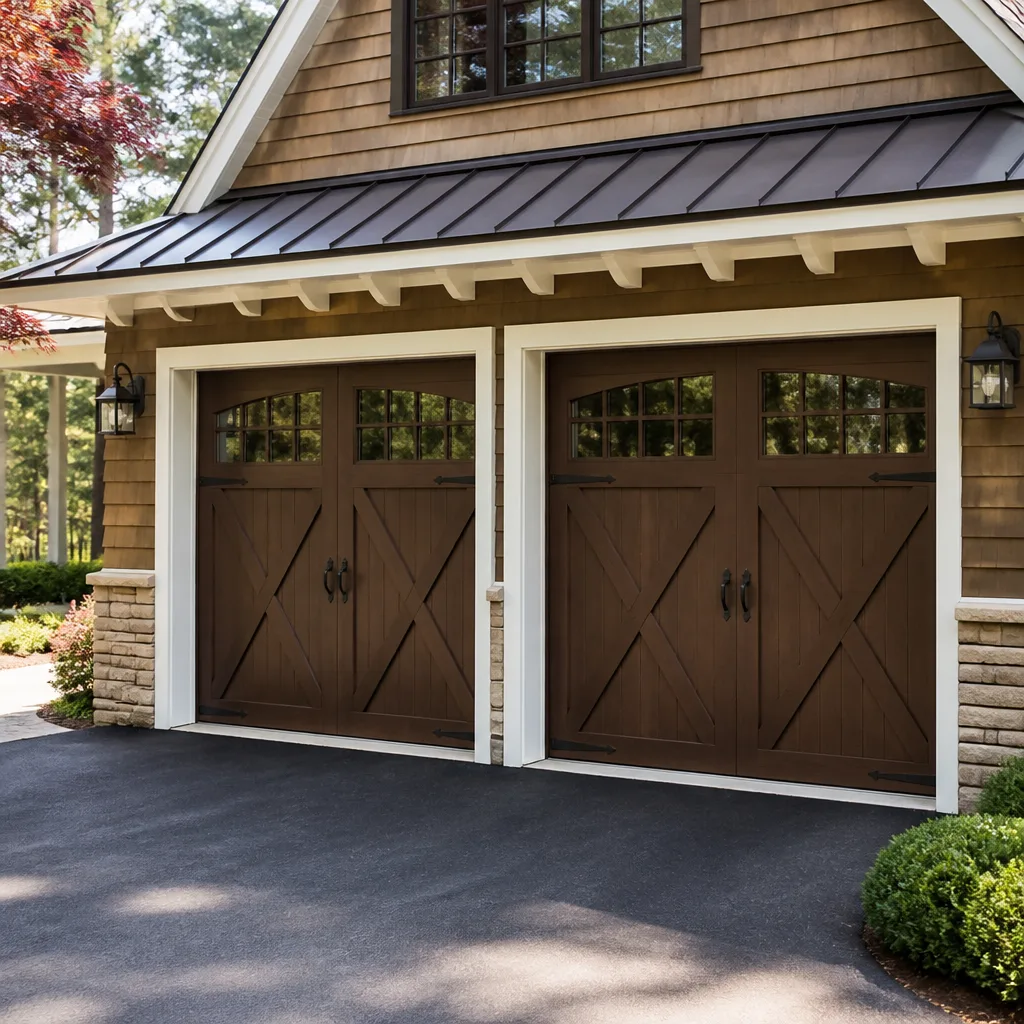 Carriage house
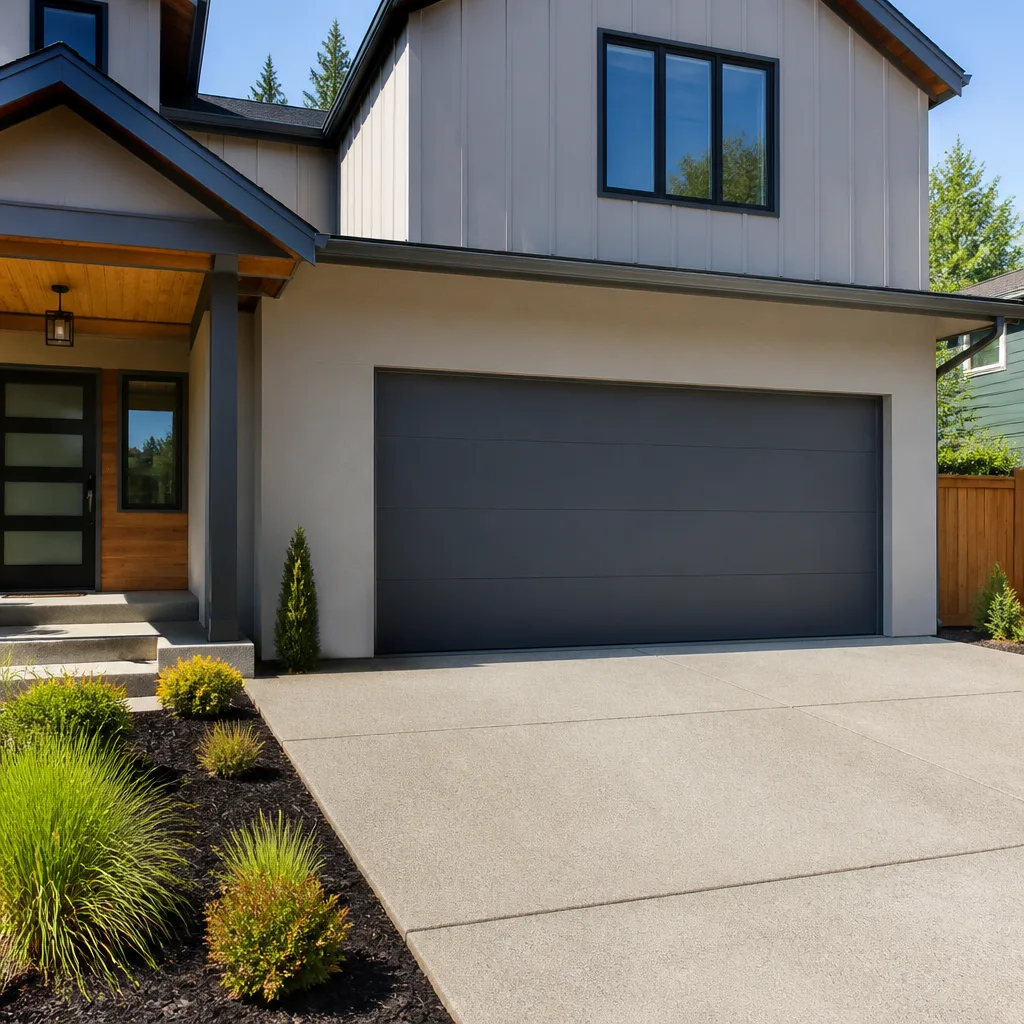 Modern flush
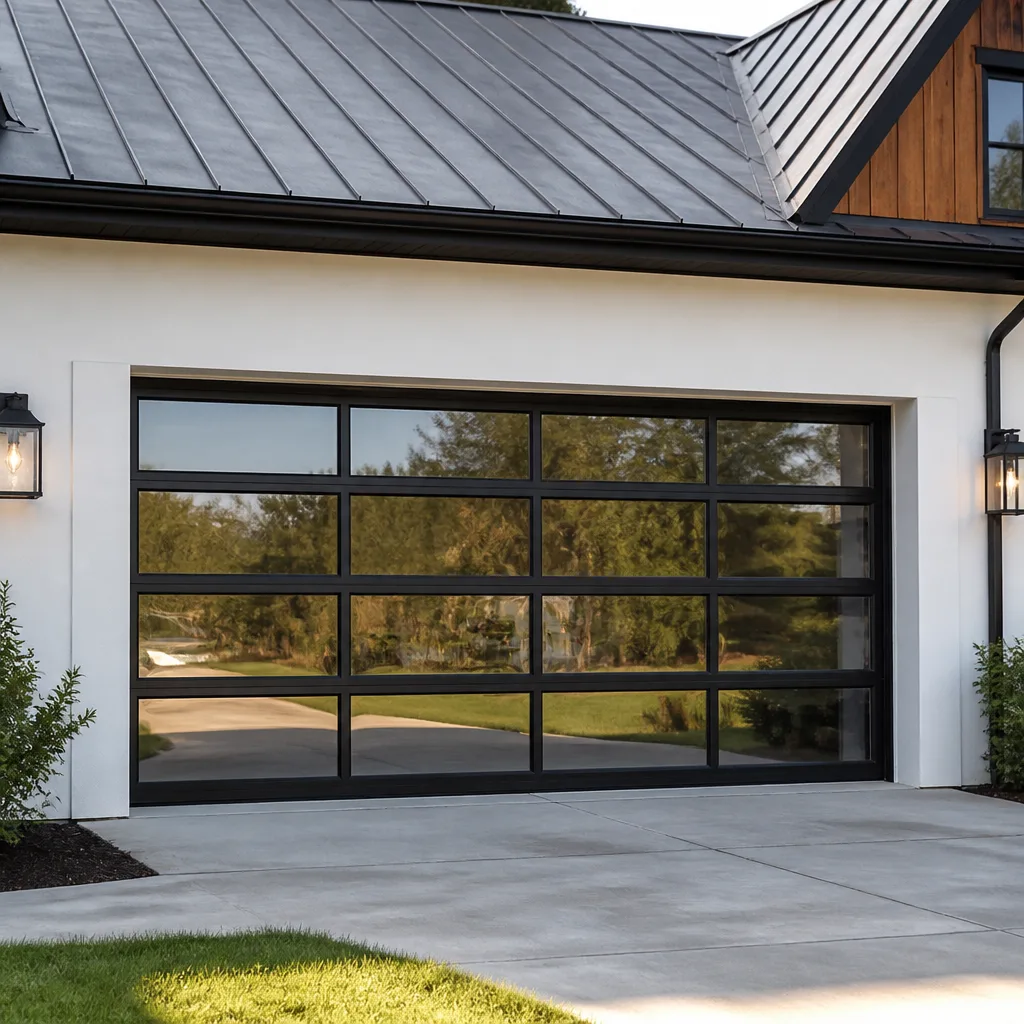 Full-view glass
 LiftMaster openers
 Chamberlain openers
Full 25-point door and opener safety check with every visit - springs, cables, rollers, tracks, and your LiftMaster or Chamberlain opener included
You get a price before we start. It does not change when the truck arrives.
Get your free estimateGarage Door Repair Maintenance Checklist for Alief Homeowners
In our experience, a garage door technician can often tell a door hasn’t been maintained in 18 months just by listening to it. The squeal at the midpoint, the lag between button press and movement, the shudder just before it settles closed: these follow a predictable pattern that a 20-minute quarterly check interrupts entirely. Most maintenance checklists recycle the same generic seven steps regardless of geography. This one is built around the specific failure sequence Alief homeowners see: humidity-driven corrosion first, misalignment second, opener strain third. By the end, you’ll know exactly what to check, what to listen for, what to skip, and when the right move is to call for Garage Door Repair.
Quick Answer
A proper garage door maintenance checklist for Alief homes breaks into three frequencies: monthly visual checks (seals, rust, hardware), quarterly mechanical tests (balance, force, lubrication of correct parts only), and an annual professional inspection of springs, cables, tracks, and opener torque. The two most damaging mistakes we see are lubricating the tracks and ignoring a door that no longer holds position when disconnected from the opener. That second one is the early warning that a spring is losing tension, and in humid Alief air, the window between warning and failure is shorter than you’d think.
Styles & brands we work with
Table of Contents
- The Monthly Visual Check: What Your Door Tells You in 10 Minutes
- The Quarterly Mechanical Test: Balance, Force, and Sound
- Lubrication Done Right: Why the Tracks Are Off-Limits
- Humidity-Specific Checks for Alief: Rust, Seals, and Siding Swell
- The Annual Professional Inspection: What We Actually Look For
- Documentation: Building a Record That Pays You Back
- Common Mistakes to Avoid
- When to Call a Professional
The Monthly Visual Check: What Your Door Tells You in 10 Minutes
This is the fastest pass and the one most Alief homeowners skip, usually because the door opens and closes without complaint. Fair. But the monthly check is designed to catch what hasn’t failed yet. Walk through these five observations with the door closed, then once more with it open. Ten minutes total.
- Bottom seal condition. Crouch and look at the rubber strip along the bottom edge of the door. In Alief’s wet season, this strip is the first component to degrade. Look for flattening, cracks at the fold points, or daylight visible underneath. A failed seal lets in water, insects, and enough humidity to accelerate corrosion on every metal part above it.
- Roller wheels. Inspect each roller where it meets the vertical track. Nylon rollers should look intact, not chipped or oval. Steel rollers should show no orange surface rust at the bearing. A seized roller doesn’t roll – it slides, and sliding grinds the track.
- Hinges and brackets. Run your eyes along every hinge plate and mounting bracket. In Alief’s coastal humidity, surface rust forms first at the fasteners. Surface rust isn’t an emergency, but it’s a countdown. Catch it before it becomes pitting rust, which means replacement.
- Cables. Look at the pair of steel cables running up either side of the door to the drums above. They should look evenly tensioned and free of frays. Frays are not a fix-it-this-weekend item – they are a shut-the-door-gently-and-call item. A snapping cable under tension is dangerous and will drop the door.
- Panel condition. For steel doors, check for dents that let water sit. For wood or wood-composite doors, look at the bottom panel edges for swelling or soft spots, especially if the bottom seal has been compromised.
None of these observations require tools. They require attention. We’ve been called out to Alief homes where a $12 bottom seal replacement at month three would have prevented a $400 track and roller replacement at month fourteen. The math on monthly attention is unkind to skipping it.
The Quarterly Mechanical Test: Balance, Force, and Sound
Every three months, move beyond looking and start testing how the door performs. This is where you catch the two most expensive problems before they become emergencies: spring fatigue and opener strain. Both announce themselves early, and both are audible.
Test 1: Balance. Pull the red emergency release handle while the door is closed. Manually raise the door to waist height. Let go. A healthy door stays put, or drifts no more than an inch or two. If it drops, the springs are losing tension. If it rises, they’re over-tensioned. Either way, the spring assembly needs attention from someone who works on torsion systems regularly. A door that won’t hold position transfers all that extra work to the opener motor, and opener motors are not designed to compensate for weak springs. They burn out early. We replace openers in Alief every month that were murdered by exactly this.
Test 2: Force reversal. With the door open, place a rolled towel on the floor where the door lands. Close it. The door should reverse within a second or two of contacting the towel. If it keeps pressing down, the force setting is too high. This is a safety adjustment and a sign the opener’s pressure sensor may be failing. On Chamberlain, LiftMaster, and Craftsman units, this is usually a 10-minute adjustment. On older Genie screw-drive models, it can indicate a failing RPM sensor. Test this every quarter, no exceptions – it’s the check that keeps a garage door from closing on a kid or a pet.
Test 3: Sound. Operate the door three times in a row while standing inside the garage. Listen for anything that changes pitch as the door moves: a grinding sound that moves with the rollers, a squeal that peaks at the midpoint, a thump as the door transitions from vertical to horizontal track. Each sound maps to a different failing component, and the specific sound tells you whether you’re dealing with rollers, hinges, the spring, or the opener gear. A door that sounds smooth today will not sound smooth forever, but it will warn you for weeks before it actually binds. The warning is the quarterly listening window.
Garage Door Repair in Brookside Village and Alief share the same Gulf humidity patterns, and the mechanical test results we see are nearly identical across both areas: springs fatigue in predictable windows, and openers fail soon after the balance test gets ignored. The geography matters because the test matters more here than it would in, say, El Paso.
Lubrication Done Right: Why the Tracks Are Off-Limits
This is the single most misunderstood step in nearly every garage door maintenance article online, and it causes real damage. The tracks – the vertical and horizontal metal channels the rollers travel in – should never be lubricated. Not with WD-40, not with white lithium grease, not with garage door lubricant, not with anything. Tracks need to stay dry so the rollers grip and roll. Greasing the tracks turns them into a dust trap. In Alief’s climate, that dust absorbs humidity and turns into a paste that accelerates roller wear and makes the door drag. We have cleaned more gummed-up tracks than we can count, and half of them were gummed up by a well-meaning homeowner following a bad checklist.
Here is the correct lubrication map, and it’s short:
- Rollers: Only if they have metal bearings. A drop of silicone-based lubricant on each bearing, twice a year, keeps them quiet. Nylon rollers with sealed bearings are designed to run dry; adding lubricant there just attracts grit.
- Hinges: The pivot pins on every hinge plate get a light coat of silicone or white lithium spray. This is the most common source of that midpoint squeal.
- Springs: Torsion springs need a thin, even coat of spray lubricant along the entire coil length, twice a year. This prevents surface rust in humid air and keeps coils from binding against each other. Extension springs get the same treatment. Never use grease on springs – grease holds moisture against the metal, and that’s the enemy in Alief.
- Opener rail (chain or screw): Chain-drive rails should be wiped clean and given a light coat of the lubricant specified by the opener manufacturer. On a Chamberlain or LiftMaster belt-drive, there is nothing to lubricate – the belt is engineered dry. On a Genie screw-drive, use the white lithium grease designed for that screw, not a generic spray.
Skipping lubrication entirely is less damaging than lubricating the wrong parts. But skipping it entirely means bearings run dry, hinges wear oval, and springs surface-rust. The quarterly mechanical test above is the natural moment to lubricate – you’re already moving the door through its range, so you can reach everything while you’re there.
Humidity-Specific Checks for Alief: Rust, Seals, and Siding Swell
Alief sits close enough to the Gulf that the air is doing constant, slow work on every metal component in a garage. This section covers the three checks that matter most when the humidity runs high, which in Alief is most of the year with peaks from April through October.
- Bottom seal integrity, twice as often as the national advice suggests. Most garage door maintenance guides written for Phoenix or Denver recommend checking the bottom seal twice a year. In Alief, that’s not enough. The wet season turns a cracked seal into a moisture pump, wicking water under the door and into the garage air. Check it monthly when it’s humid and quarterly otherwise. Replace it the moment you see a crack at the fold line, not when it has fully flattened. The material is cheap; the water damage it prevents is not.
- Roller brackets and bottom brackets for surface rust. The bottom brackets are the canaries. They sit lowest, they catch splash from a rising driveway puddle, and they carry the most load. Surface rust here is normal within a few years in Alief and isn’t cause for alarm. But if it progresses to flaking or pitting, the bracket has lost structural margin. We replace pitted bottom brackets before they fail. On Amarr and Wayne Dalton doors, replacement brackets are usually available same-week; on older doors, we may need to match a universal bracket. Either way, catch it at the surface-rust stage and the fix is simple.
- Wood panel swelling gaps. If your door is wood or wood-composite, watch the seams between panels and the edges of the bottom section after sustained rain. Swollen wood changes the door’s weight distribution and can pull hinges out of alignment. The telltale sign is a seam that looks tight when the door is open but gapped when it’s closed, or vice versa. That movement is the wood expanding and contracting with humidity. It will eventually crack the paint at the fasteners and then rot. Sealing the bottom panel edges and touching up fastener paint is a dry-season job in Alief – you need a run of low humidity for sealant to cure properly.
These three checks appear on almost no national maintenance lists because they’re location-specific. But the failure pattern in Alief is consistent enough that we can predict which door will need what just from the age of the bottom seal and a quick look at the bottom brackets. The homeowners who catch these early keep their doors running years longer than their neighbors. The neighbors call us more often. We don’t mind the calls, but the early catchers spend less.
The Annual Professional Inspection: What We Actually Look For
An annual inspection by a garage door specialist is not a luxury add-on. It is the layer of maintenance that tools and experience make possible, and it’s where problems that are invisible to a visual check get caught early. Here is what a proper annual inspection covers, in the order we work through it:
- Spring torque measurement. Torsion springs are rated for a cycle count – usually 10,000 cycles for standard springs, higher for premium ones. A technician measures the spring’s current tension against the door’s weight and reads the signs (gap between coils, elongation, surface condition) to estimate remaining life. This is the highest-stakes component on the door. We never advise homeowners to touch torsion springs themselves, period. The stored energy in a wound spring can cause serious injury. A pro carries the winding bars, the experience, and the respect for the component.
- Cable and drum inspection. Cables wear from the inside out. A fray that’s hidden under the outer wrap is only visible when the cable is slack, which means a technician needs to detension the system to see it. Drums develop grooves that cause the cable to stack unevenly, and uneven stacking is the precursor to a snapped cable. Catching a worn drum at inspection costs a fraction of what the cable failure repairs cost.
- Track alignment and roller condition. We use a laser level to check vertical track plumb and horizontal track angle. A door that’s out of alignment puts side-load on the rollers, which wears them oval, which worsens the misalignment – a feedback loop. Fixing track alignment early keeps rollers, hinges, and the opener from eating themselves.
- Opener diagnostic pass. Force settings, travel limits, safety sensor alignment, gear condition, RPM consistency. On LiftMaster and Chamberlain units, we can read error codes from the logic board. On Genie screw-drives, we check screw wear and carriage play. On Craftsman chain-drives, we listen for gear spall. The goal is never to sell a new opener – it’s to catch a $40 gear or a $25 sensor before it becomes a $450 motor replacement.
- Hardware torque check. Every bolt and lag screw on the hinges, struts, and track brackets gets a torque pass. Vibration loosens hardware steadily. In Alief’s humidity, loosened fasteners rust faster because water creeps into the gaps.
None of this is a DIY list. The annual inspection is the one appointment that pays for itself in avoided failures. Garage Door Opener Repair in Brookside Village and Alief follow the same inspection protocol we use, because humidity doesn’t respect municipal boundaries.
Documentation: Building a Record That Pays You Back
Few homeowners document garage door maintenance. The ones who do have a meaningful edge in two situations: warranty claims and home sales. Here’s how to build a record that actually holds up.
For warranty support: Both door manufacturers (Amarr, Wayne Dalton, Raynor among them) and opener manufacturers (Chamberlain, LiftMaster, Genie, Craftsman) carry written warranties that presume reasonable maintenance. When a part fails under warranty, the first question from the manufacturer is often about maintenance history. A dated log with photos matters. Write down what you checked, what you lubed, what you replaced, and when. A photo of a bottom seal before and after replacement is more valuable than a paragraph describing it. Keep the log in the garage, because that’s where you’ll be when you need it.
For pre-sale disclosure: When you sell an Alief home, a documented garage door history speeds the process and protects you. Buyers and inspectors look at the garage door closely – it’s the largest moving part in the house, and an inspector who finds a neglected spring or a burned chain-drive gear will flag it. A maintenance log, plus receipts for any professional service, turns a potential negotiation point into a settled question. Disclose what was done and when. If you’ve had an annual inspection, keep the technician’s report in the same folder as your HVAC service records.
What to record:
- Date of each monthly visual check and quarterly mechanical test
- Components lubricated and product used
- Any part replaced, with brand and part number if known
- Spring cycle count estimate from the annual inspection
- Opener diagnostic codes observed
- Photos of seals, brackets, and springs, dated
This is not busywork. A 2016 Raynor door with a documented annual inspection history is worth more on a disclosure form than an identical door with no paper trail. The documentation itself is a maintenance asset. It tells the next owner that the door was treated like the load-bearing, moving system it is.
Common Mistakes to Avoid
- Lubricating the tracks. Already covered above, but worth repeating because it’s the most common error in DIY garage door maintenance. Dry tracks are functional tracks. A greased track in Alief humidity turns into a grinding paste inside a month.
- Ignoring the balance test because the opener still works. A weak spring doesn’t stop the door from opening; it just transfers the work to the opener motor. By the time the opener fails, you’re paying for a spring and a motor instead of one spring. The balance test costs 45 seconds.
- Disconnecting the door with the opener engaged. Never pull the emergency release while the opener is running or while the door is in the up position with tension on the spring. Pull the release when the door is closed, or have a technician do it. A door that’s under spring tension can slam down if released at the wrong point.
- Replacing one spring instead of the pair. Torsion springs fatigue together. Replacing one leaves you with a mismatched pair, which stresses the new spring and leaves the door unbalanced. This is a false economy we see consistently. When one spring is done, both are done.
- Treating rust as cosmetic. Surface rust is cosmetic. Pitting rust is structural. The line between them is the line between a $10 wire brush job and a $180 bracket replacement. Learn to tell the difference, or ask a pro to point it out during the annual inspection.
- Skipping the force reversal test because you don’t have kids or pets. The force reversal setting isn’t only for child safety. A mis-calibrated force setting means the opener will keep pressing down after the door meets resistance, which bends tracks, cracks panels, and strips opener gears. Test it every quarter regardless of who lives in the house.
When to Call a Professional
Some jobs are maintenance, and some are diagnosis. Call a specialist when the balance test fails and the door drops or rises on its own, when you see frayed cables or visible spring gaps, when the door shudders through the midpoint despite fresh lubrication, when you hear grinding from the opener housing, when the force reversal test doesn’t reverse, or when you’ve documented a problem and don’t know exactly what it means. These are not DIY-safe conditions. A door that fails the balance test with a frayed cable is a door that can come down unexpectedly, and no checklist replaces a trained eye on that. Falcon Garage Door Repair offers free estimates in Alief – call (833) 589-6911 and one of our garage door specialists will walk the full checklist with you, tool in hand. If it’s maintainable, we’ll tell you. If it’s failing, you’ll know exactly what it costs to fix before any work starts.
See the difference
 Before
 After
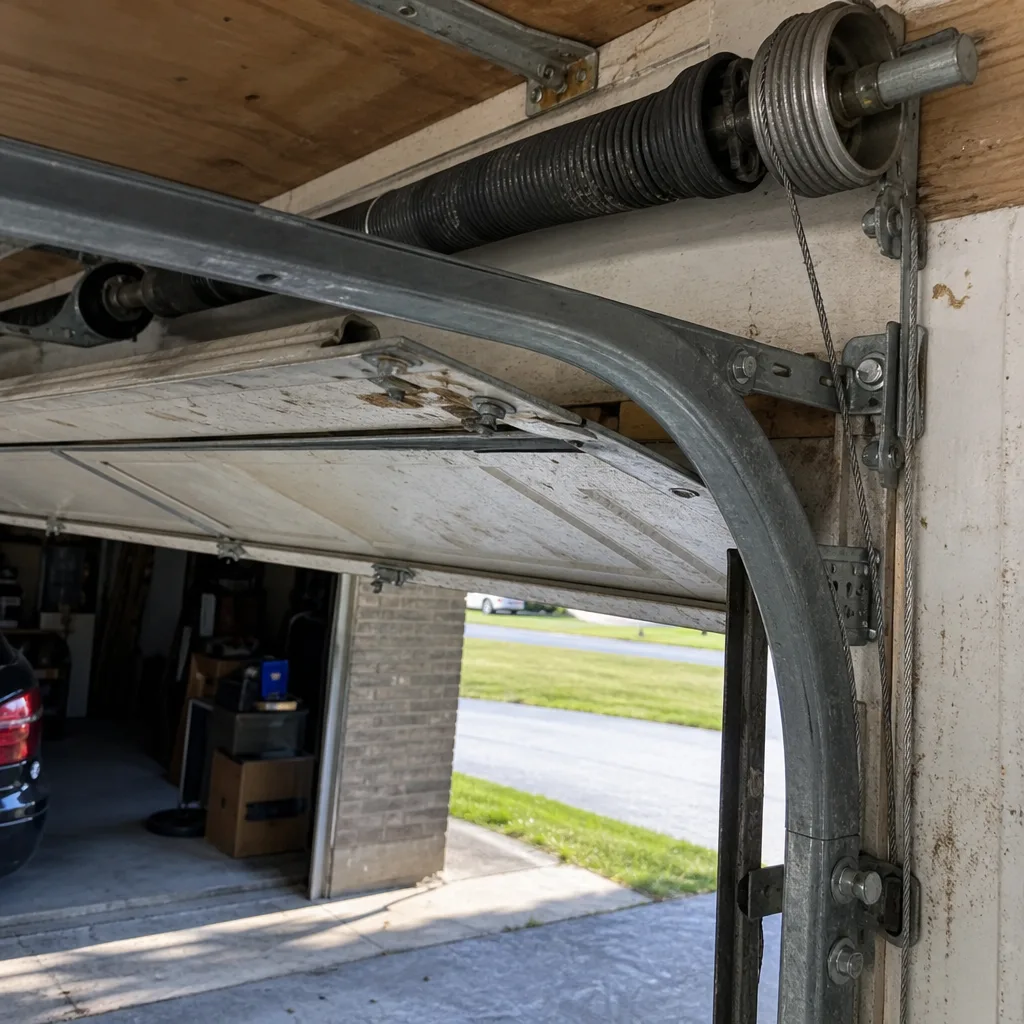 Before
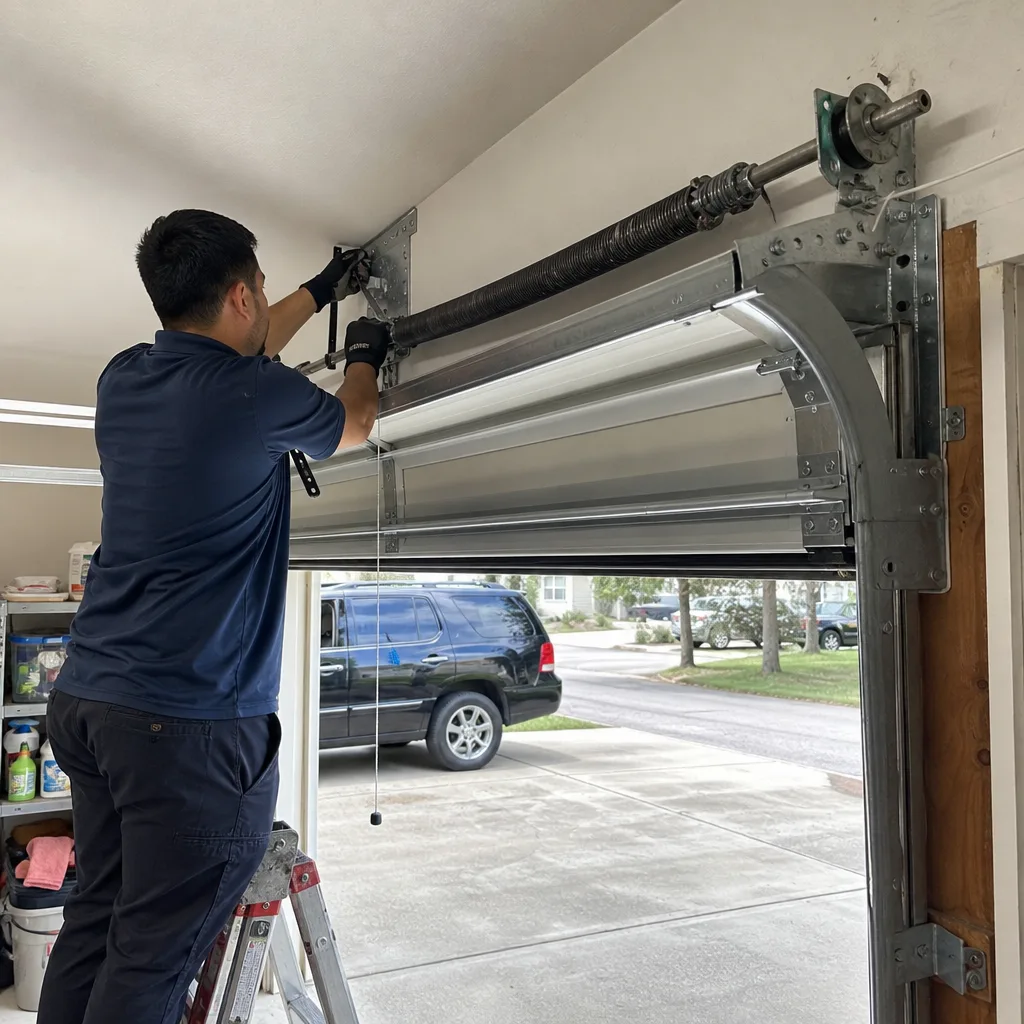 After
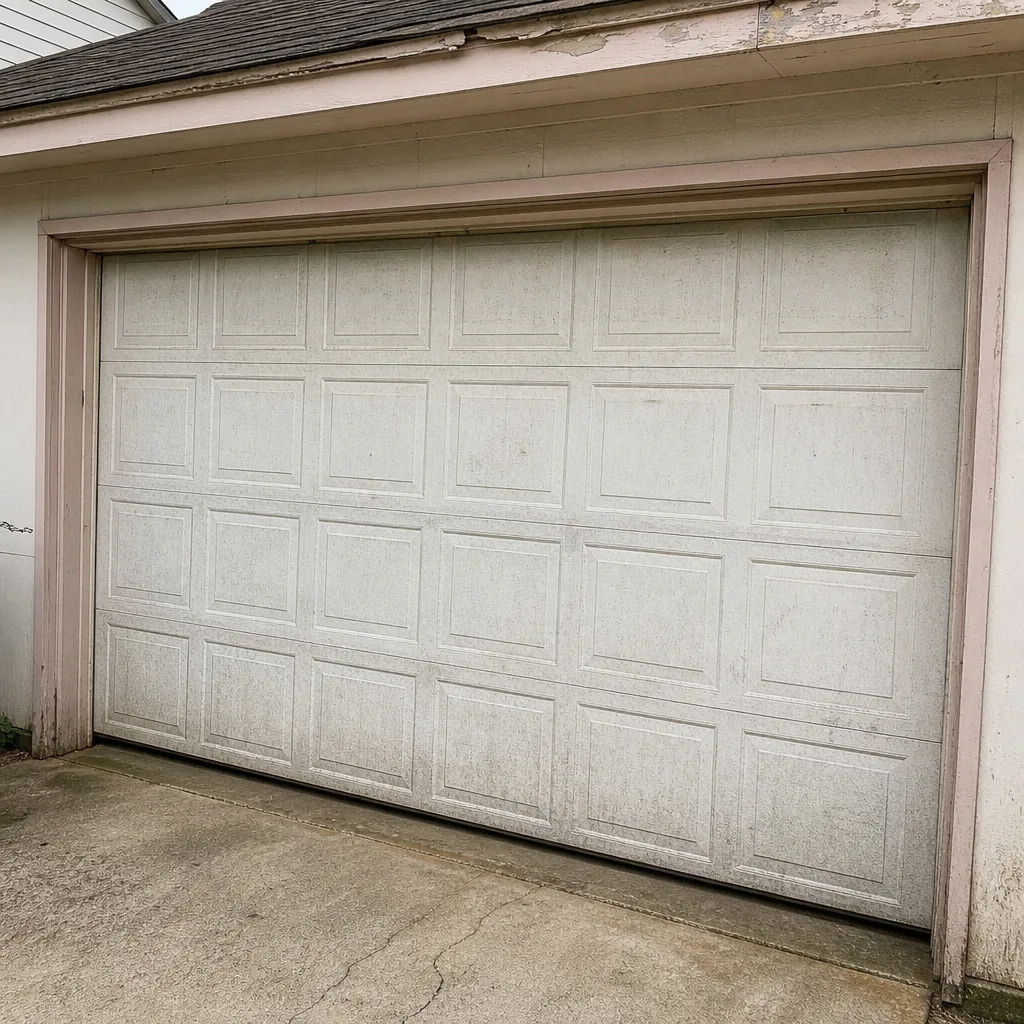 Before
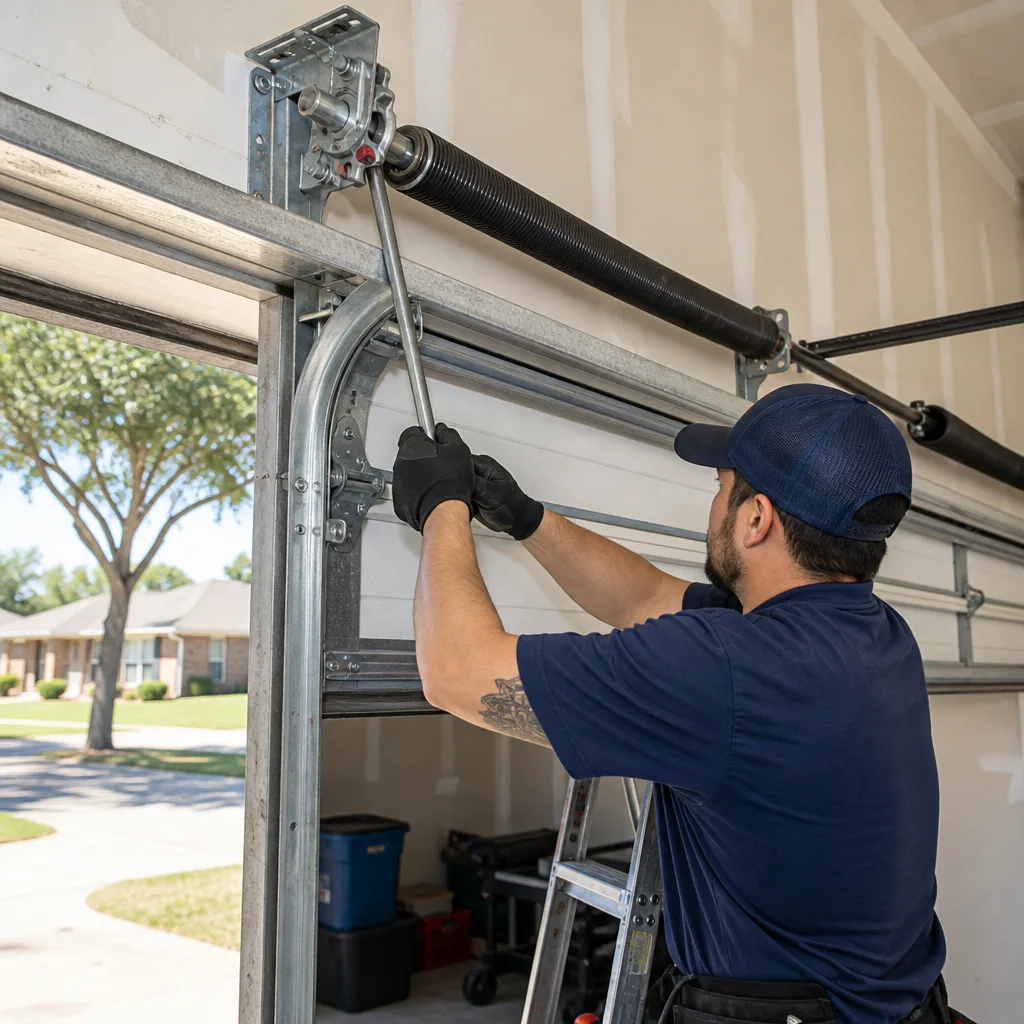 After
Frequently Asked Questions
Do a 10-minute visual check monthly, a balance and force test plus lubrication quarterly, and schedule a professional inspection once a year. Alief’s humidity makes the bottom seal and metal brackets degrade faster than in drier parts of Texas, so monthly checks matter more here than the national average advice suggests. Call (833) 589-6911 for a free estimate on an annual inspection.
Yes, for the visual checks, quarterly testing, and lubrication of hinges, rollers with bearings, and springs. No, for anything involving torsion spring adjustment, cable replacement, track realignment, or opener force recalibration. These are high-tension or high-voltage components, and a mistake can cause serious injury. The division of labor is simple: you inspect and lubricate, a specialist adjusts and replaces.
The failure sequence in Alief is predictable: the bottom seal fails first, letting moisture in; roller brackets and hinges rust next; a neglected balance test allows the spring to weaken unnoticed; the opener motor strains against the increased load and fails early. That entire cascade is preventable with the monthly and quarterly checks above. The total replacement cost for the cascade is roughly four to six times the cost of the maintenance parts and one annual inspection.
No. Tracks should remain dry. Lubricating tracks attracts dust, and in Alief’s humidity that dust becomes an abrasive paste that wears rollers and causes drag. Lubricate the roller bearings, hinge pins, and springs only, using a silicone-based spray for rollers and hinges and a spring-specific lubricant for springs.
Do the balance test: pull the emergency release with the door closed, raise it manually to waist height, and let go. If it drops more than an inch or two, the springs are losing tension. Other signs include a visible gap between coils on a torsion spring, a dull popping sound when opening, and a door that feels heavier to lift manually than it did three months ago. When one spring fails, replace both. Call (833) 589-6911 for a free estimate – we’ll confirm the diagnosis before recommending the fix.
For Alief homeowners who use the door daily, yes. The annual professional inspection catches spring fatigue and opener strain before they cascade, and documented maintenance preserves warranty claims and resale value. Think of it this way: the quarterly checks are free and take 20 minutes. The annual inspection costs a small fraction of a single spring or opener replacement. The math clears itself.
The Bottom Line
The garage door is the heaviest moving object in your Alief home, and it’s fighting the Gulf humidity every single day. The maintenance checklist that works here is not the generic one-size-fits-all list: it’s monthly visual checks for seal and rust, quarterly mechanical tests for balance and force reversal, correct lubrication that never touches the tracks, and an annual professional inspection of the springs, cables, tracks, and opener. Document everything. Catch the bottom seal early, test the balance honestly, and don’t put off the force reversal check. The door tells you what’s wrong long before it fails; the checklist is how you listen. And if you’d rather have someone else do the listening, Falcon Garage Door Repair is one call away. Your Amarr, Wayne Dalton, or Raynor door will last longer for it.
Written by the team at Falcon Garage Door Repair, serving Alief since 2018. For more guides & resources, visit our blog.