Last updated October 30, 2026
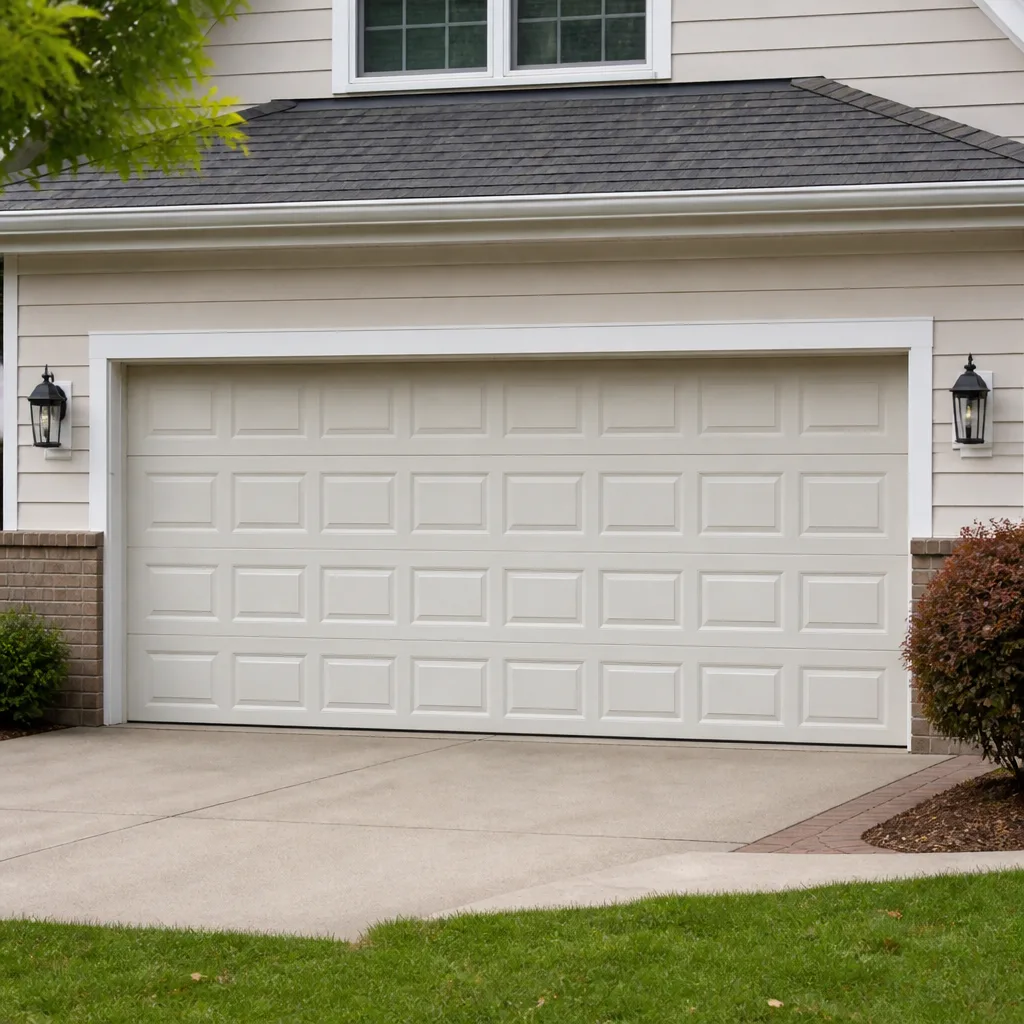 Raised-panel steel
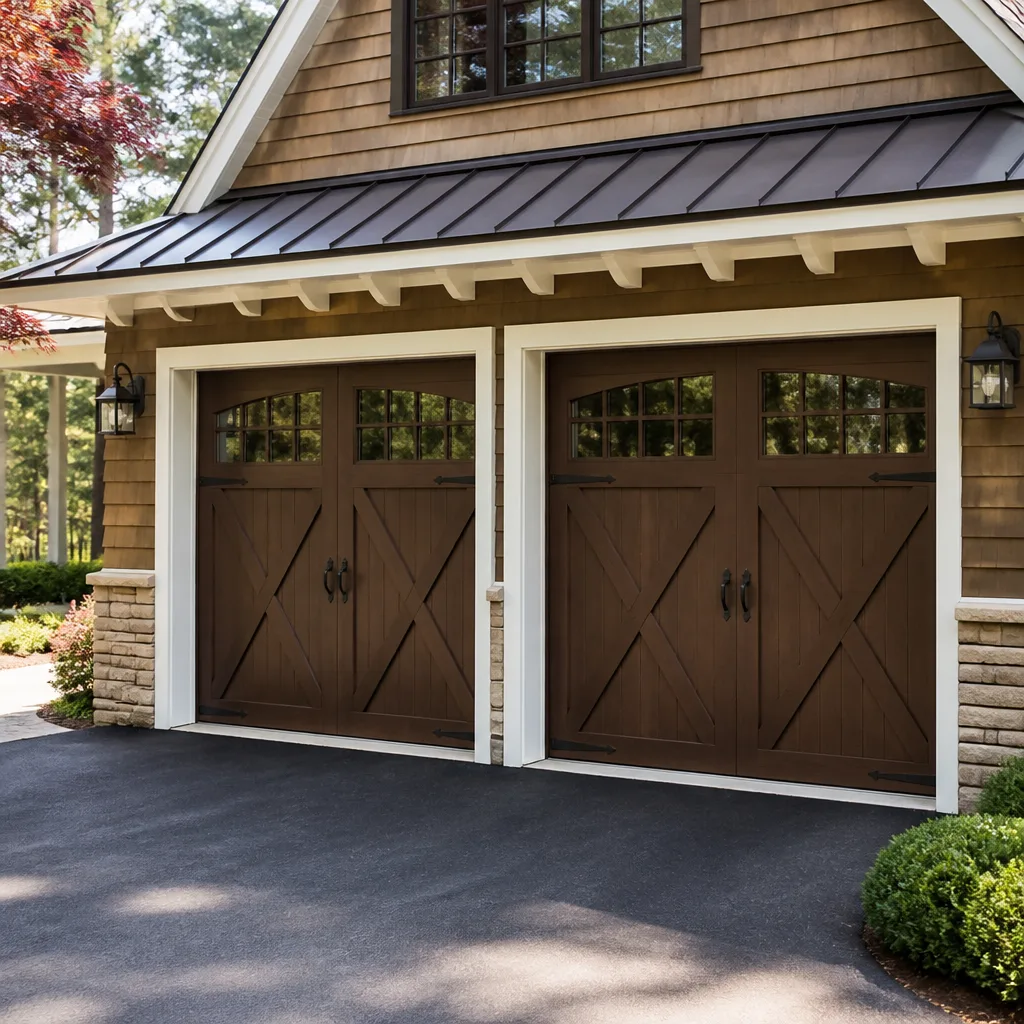 Carriage house
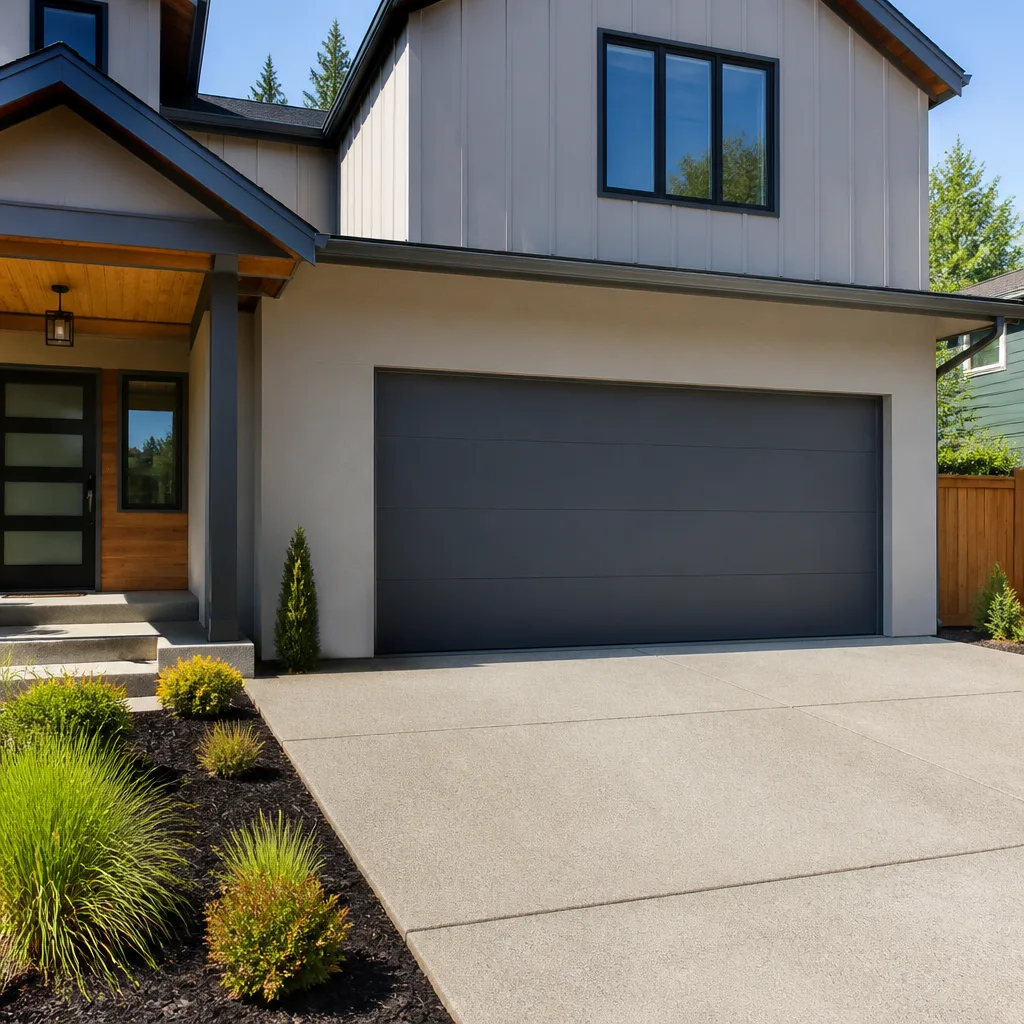 Modern flush
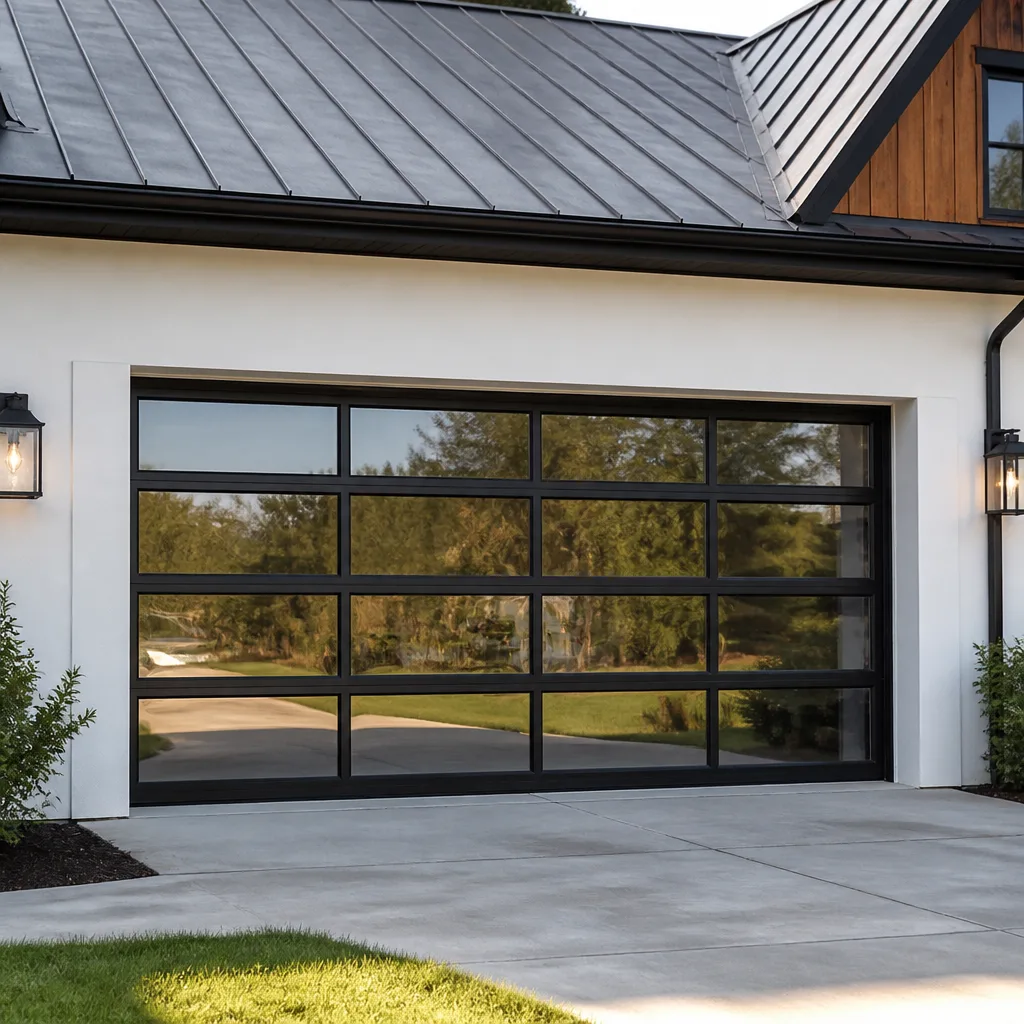 Full-view glass
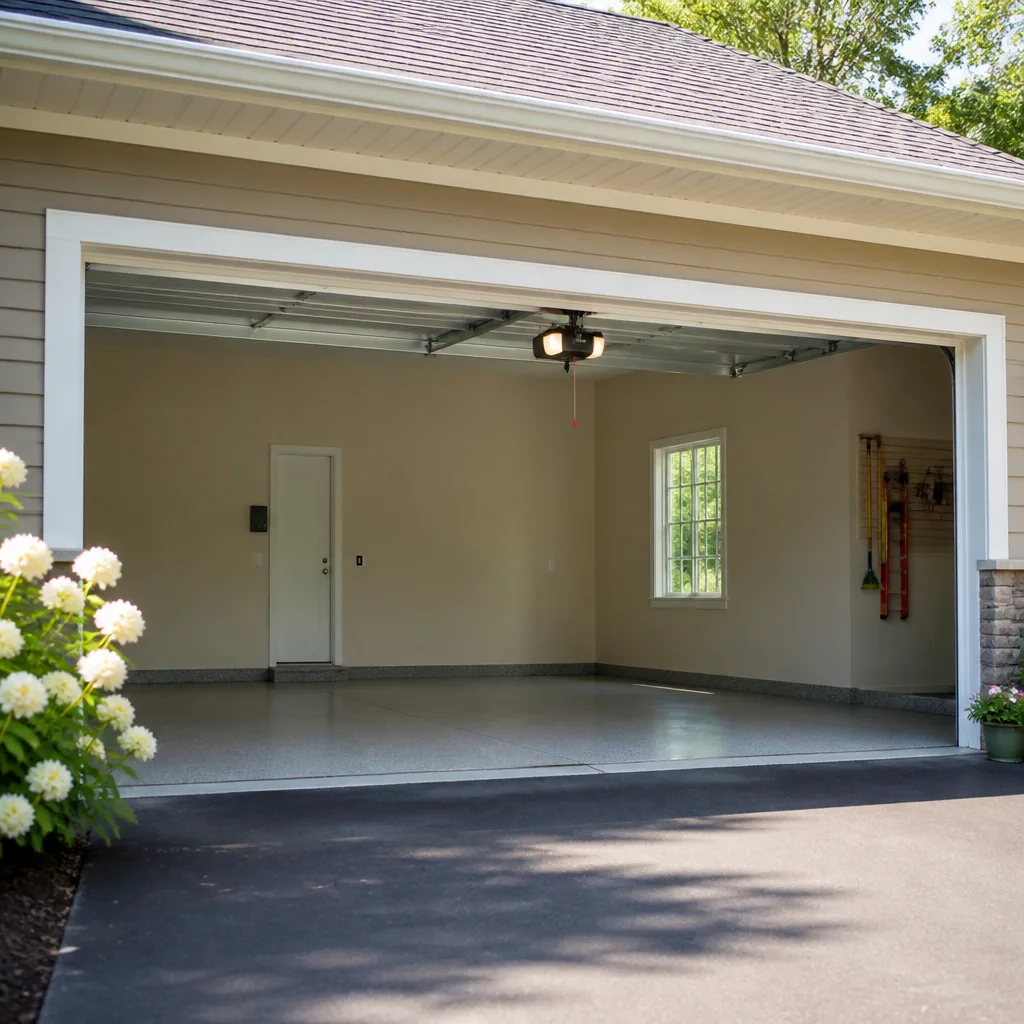 LiftMaster openers
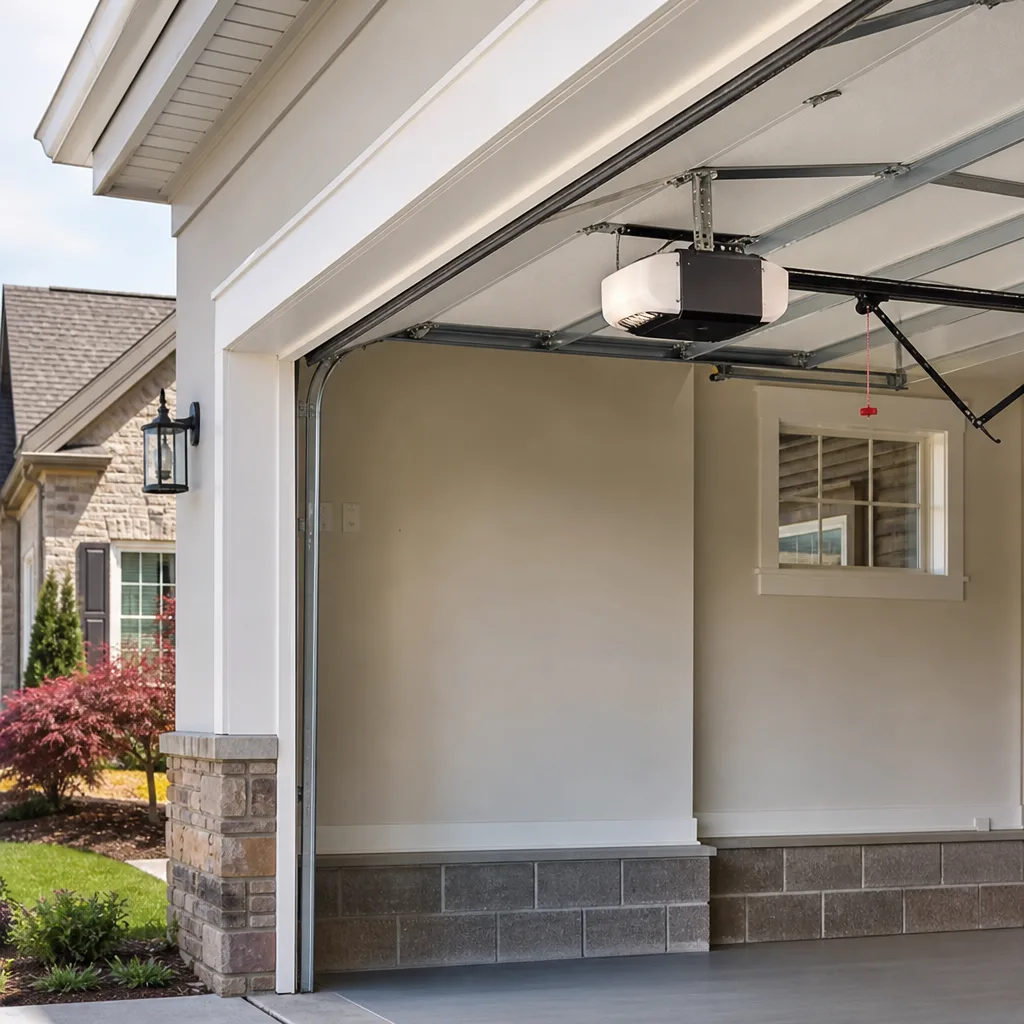 Chamberlain openers
Full 25-point door and opener safety check with every visit - springs, cables, rollers, tracks, and your LiftMaster or Chamberlain opener included
You get a price before we start. It does not change when the truck arrives.
Get your free estimateDIY vs Professional Garage Door: The Alief Homeowner’s Decision Guide
A torsion spring on a standard residential garage door stores somewhere between 100 and 250 foot-pounds of torque when fully wound. When that spring snaps unexpectedly, which it does roughly 10,000 cycles into its life, the release of that stored energy is what sends people to urgent care. In Alief, where garage doors cycle twice daily for commuters heading out Bellfort or Bissonnet, springs hit that fatigue point faster than homeowners expect. This guide gives you an honest, task-by-task breakdown of what’s genuinely safe to do yourself, what requires a professional, and what Alief’s specific conditions do to change that math.
Quick Answer
Most garage door maintenance tasks in Alief are safe for a competent DIYer: cleaning photo-eye sensors, lubricating rollers and hinges, replacing weatherstripping, and reprogramming remotes. The one hard line is torsion spring repair and replacement, which requires specialized winding bars and carries real injury risk. When in doubt, the cost of a professional call is cheaper than an emergency room visit.
Styles & brands we work with
Table of Contents
- What’s Safely DIY: The Homeowner’s List
- Torsion Springs: The One Job That Should Stop You
- How Alief Humidity Changes the Diagnosis
- The Tool Gap: What Professionals Have That You Don’t
- When DIY Voids Your Warranty
- Cost Reality Check: What You Actually Save
- Common Mistakes to Avoid
- When to Call a Professional
What’s Safely DIY: The Homeowner’s List
Let’s start with what you can absolutely do yourself. These tasks require nothing more than basic hand tools, some patience, and the willingness to read a manual. None of them involve high-tension components, and none of them put you at risk of serious injury.
Photo-eye sensor maintenance is the most common DIY fix in Alief, and it’s usually the problem when your door won’t close and reverses immediately. Dust, spider webs, and the fine silt that blows in from the Brazos River floodplain accumulate on the sensor lenses. A soft cloth and a check of the alignment bracket solves most cases in under ten minutes. If the small LED on either sensor is blinking, that’s your tell.
Lubrication is another genuinely safe task, provided you use the right product. White lithium grease on the chain or screw drive, and a silicone-based spray on rollers, hinges, and springs. In Alief’s humidity, we see homeowners reach for WD-40, which is a solvent, not a lubricant. It strips existing grease and leaves moving parts drier than before. That one product choice can turn a quiet door into a grinding one within weeks.
Remote programming is straightforward on virtually every major brand. LiftMaster and Chamberlain units use the same learn-button procedure. Craftsman openers made after 1997 do too. Most take less than two minutes and require only a step stool. The manual is usually taped to the motor housing or available online by model number.
Weatherstripping replacement matters more in Alief than in drier parts of Texas. The humidity and occasional driving rain mean a degraded bottom seal lets moisture into the garage, which warps stored items and accelerates rust on tools. Replacing the T-shaped rubber seal on an aluminum retainer is a 20-minute job with a utility knife and a flathead screwdriver. Measure the old seal before buying a replacement, and buy a roll, not a pre-cut length, so you can trim to fit exactly.
DIY Evaluation Checklist for Alief Homeowners
- Does the task involve the torsion spring? If yes, stop. That’s a professional job. No exceptions.
- Do you need to remove a bracket under tension? Bottom brackets on extension-spring doors carry load even when the door is fully open. If the cable is routed through a pulley under tension, call someone.
- Are you comfortable with the garage door manual? Most openers and doors have model-specific reset and adjustment procedures. If reading a 20-page PDF feels like a barrier, that’s your signal.
- Do you have the right tools for the job? A socket set and an adjustable wrench are not winding bars. We’ll get to that.
- Can you access both sides of the door safely? Alief garages built in the 1970s and 1980s often have tight side clearances. If you can’t stand comfortably at both ends of the door, you can’t work on it safely.
Torsion Springs: The One Job That Should Stop You
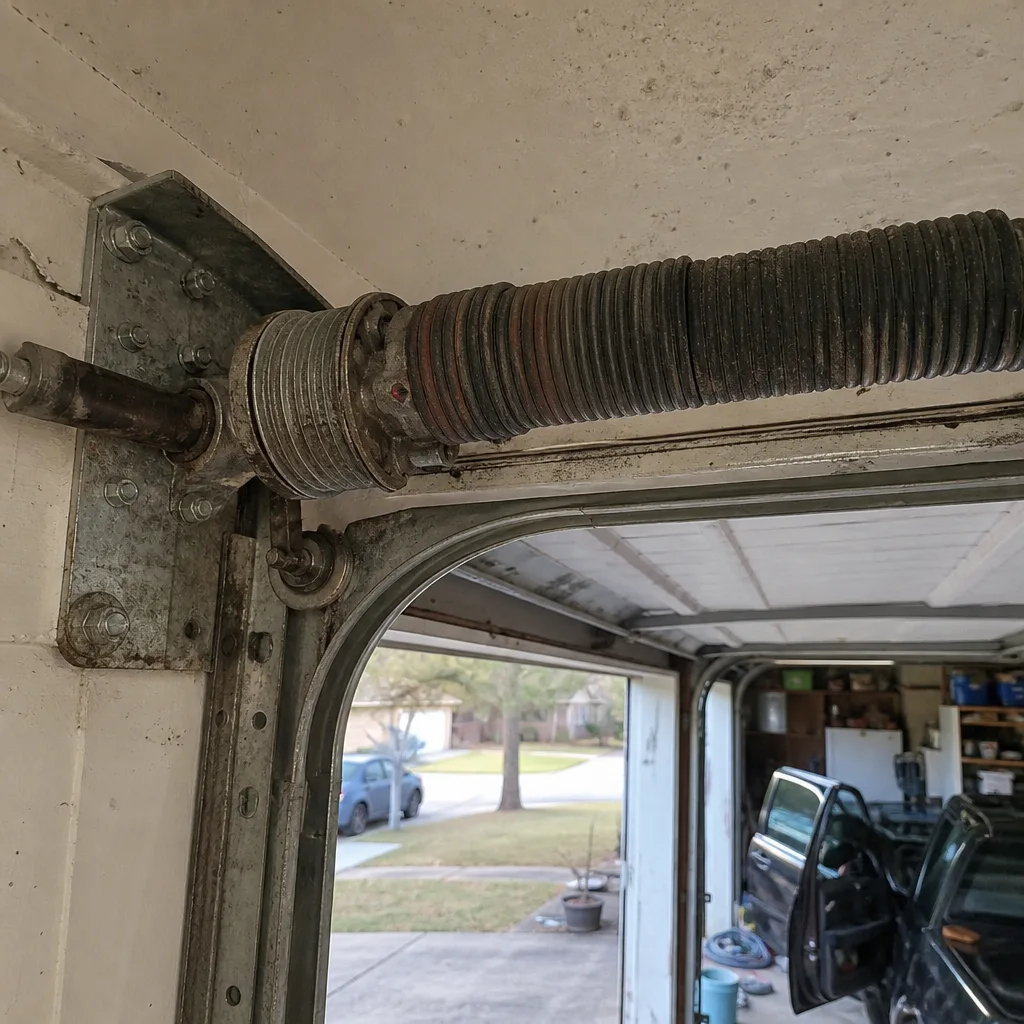
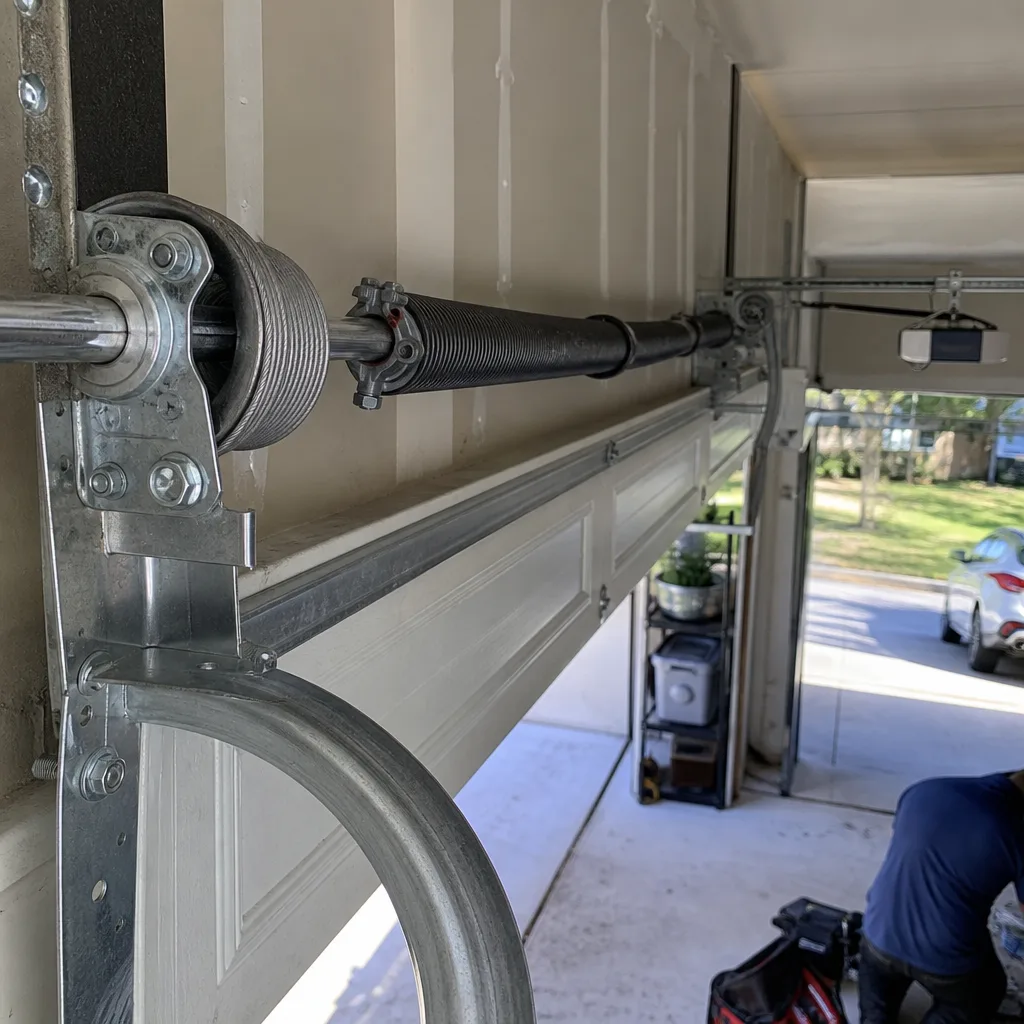
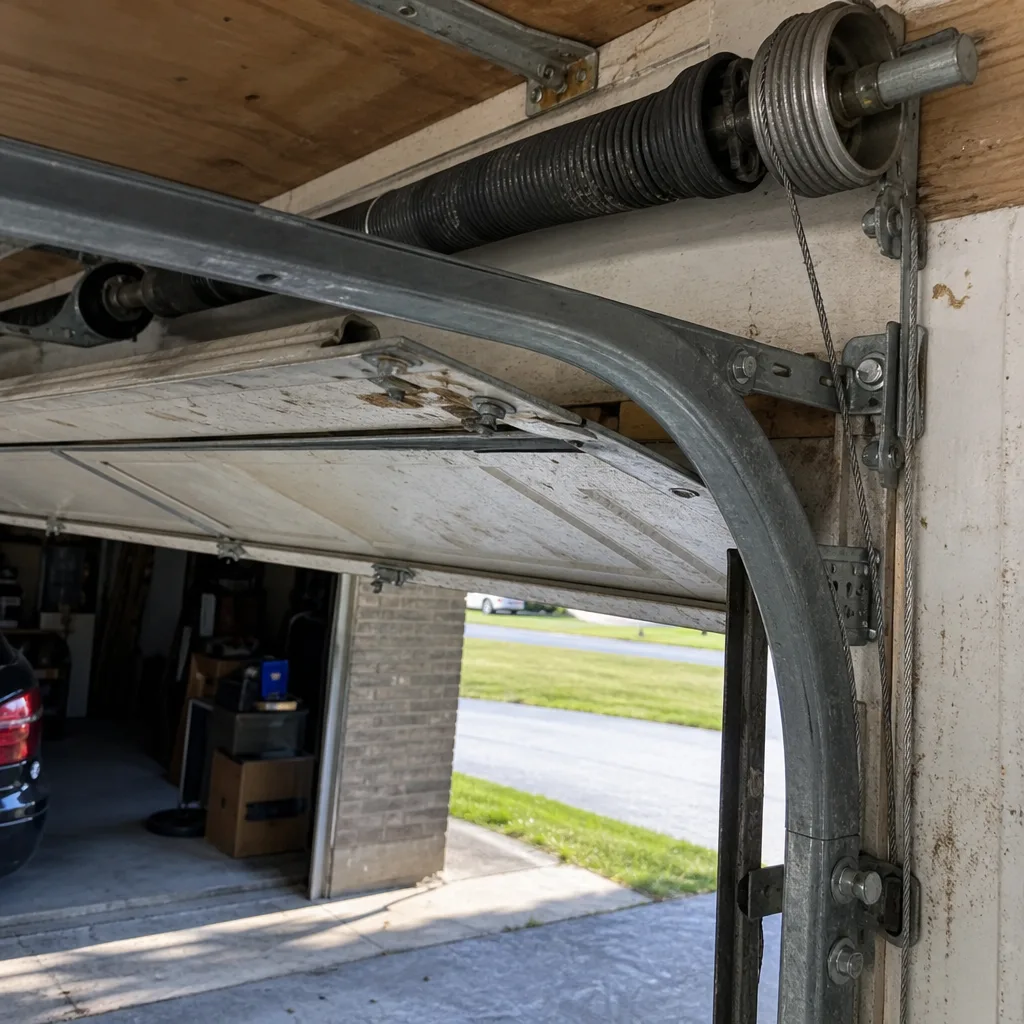
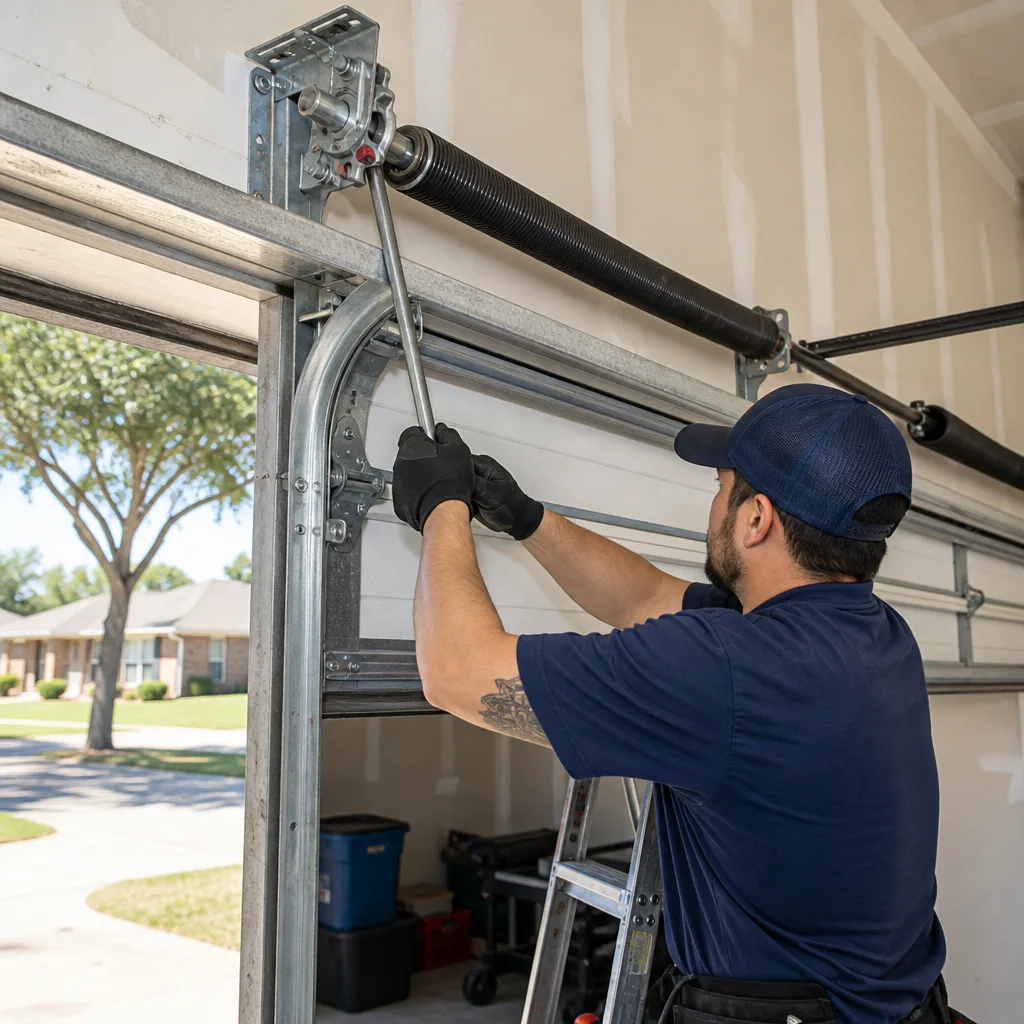
Torsion springs do the heavy lifting every time your garage door goes up. They’re mounted on a horizontal shaft above the door opening, and they’re wound tight. That stored torque is what counterbalances the weight of the door, which on a double-car steel door can exceed 300 pounds.
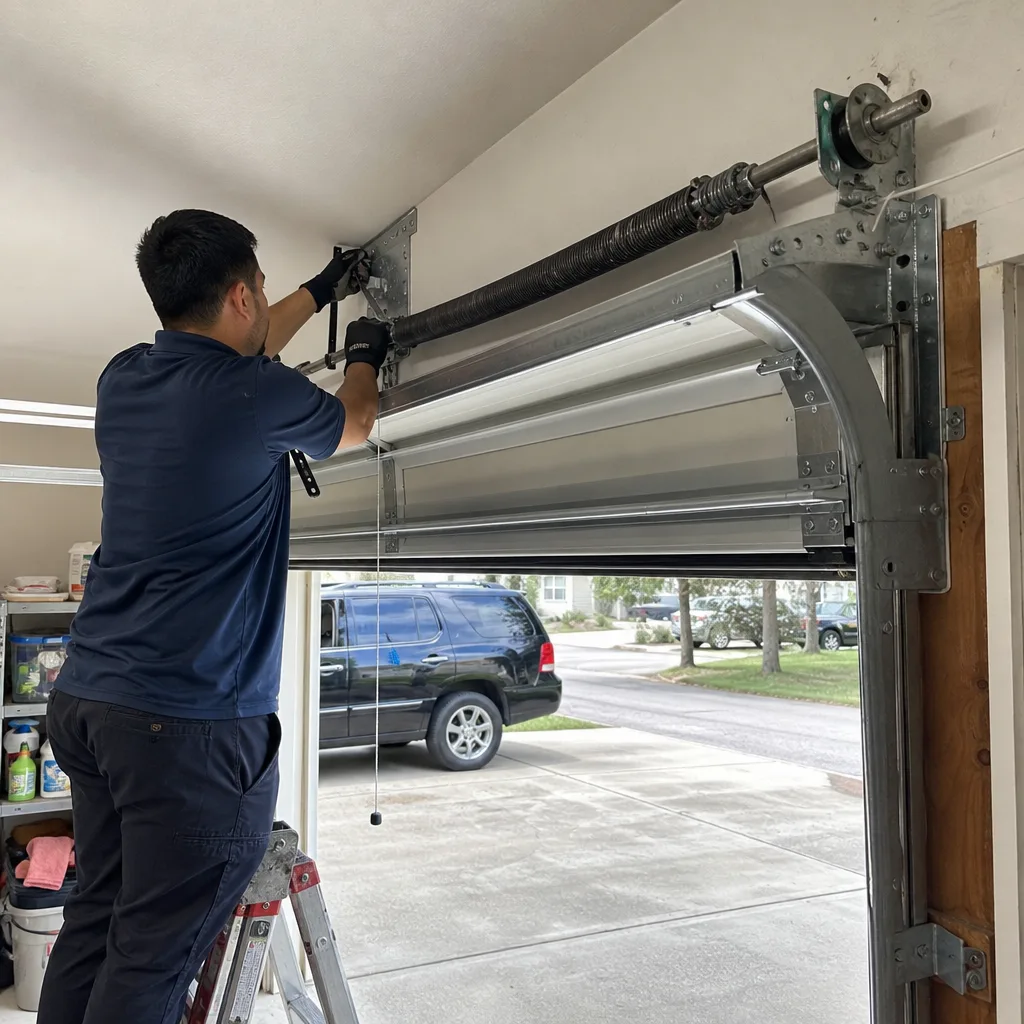
The specific danger isn’t the spring itself. It’s what happens when a homeowner substitutes the wrong tools. Professional winding bars are hardened steel rods, typically 18 inches long and a half-inch in diameter, designed to insert fully into the winding cone’s sockets. What we see in Alief garages is the improvised version: a screwdriver, a bolt, a piece of rebar, or a ratchet extension. These are shorter, softer, and don’t seat fully in the cone. When the cone slips, which it does under 200 foot-pounds of torque, the rod becomes a projectile.
The other failure mode is the unwinding sequence. A spring that’s wound to seven and a half turns for a standard 7-foot door must be unwound in a specific pattern, a quarter-turn at a time, with the bar fully seated each time. Rushing that sequence, or losing control of the bar mid-turn, is how fingers get caught between the bar and the header, or how the cone strips its set screws and the spring frees itself completely.
We’re not fear-mongering. Professional garage door technicians wind and unwind torsion springs every week without incident, because they use the right bars, the right stance, and the right sequence. The fact is that the margin for error on this particular job is narrower than nearly any other home repair task. A plumbing leak gets worse slowly. A spring that slips under tension gets worse instantly.
In our experience serving Garage Door Repair in Brookside Village and the broader Alief area, we’ve replaced springs that homeowners attempted to adjust themselves, often after watching an online video. The common thread is always the same: the tool wasn’t a winding bar, and the result was a deeper repair than the original spring replacement would have been.
How Alief Humidity Changes the Diagnosis
Alief sits in a subtropical climate band that Houston shares generally, but with specific microclimatic factors that affect garage doors. The neighborhood’s low elevation and proximity to Brays Bayou mean morning humidity routinely exceeds 90% from June through September. That moisture penetrates every unsealed component in a garage.
Rust is the first consequence. Roller bearings, hinge pins, track brackets, and spring coils all oxidize faster here than they would in, say, Austin or Dallas. A door that’s only eight years old in Alief can show corrosion that would take fifteen years to develop in a drier climate. That rust changes the noise profile of the door, adding grinding and scraping sounds that homeowners often misdiagnose as motor failure.
The more insidious effect is on symptoms themselves. A door that binds halfway up, hesitates, or reverses mid-cycle can be caused by any of a half-dozen things: rusted rollers, warped track from thermal expansion, a hot opener motor, or a spring that’s settled out of calibration. In Alief’s humidity, we see cases where two or three of those things are happening simultaneously, and the visible symptom doesn’t point to the root cause. That’s the scenario where a DIY fix addresses the wrong problem, and the door fails again within a month.
Another humidity-specific factor: the bonding of adhesive-backed weatherstripping. The vinyl or rubber seals that run along the sides and top of the door opening rely on adhesive or friction fit. High humidity causes many adhesives to fail prematurely, which means the seal sags or peels. In Alief, we recommend mechanical fasteners or compression-fit seals over adhesive-backed products wherever possible. That’s a small specification detail that saves a repeat job.
The key takeaway for the Alief homeowner doing DIY diagnosis: don’t assume the loudest symptom is the whole problem. The humidity in this area layers problems together. If you’ve fixed what you think was wrong and the door still doesn’t run right, there’s likely a second or third factor at play, and that’s when a professional diagnostic session pays for itself.
The Tool Gap: What Professionals Have That You Don’t
The garage door trade doesn’t have a high barrier to entry, but it does have a specific tool set that most homeowners don’t own, and that’s the practical difference between a DIY job and a professional one.
Winding bars are the obvious example, but they’re only the start. A professional carries a set of torsion spring gauges to measure wire diameter and coil count precisely, because “close enough” on a spring means a door that’s either too heavy to lift or too light to stay down. The wrong spring is worse than the broken one.
Drum and cable replacement requires special flat bars and an understanding of cable tension geometry. On a torsion system, the cables wind onto drums at the ends of the shaft, and the drum’s spiral groove must match the cable’s travel exactly. A mis-wound cable or a mismatched drum causes the door to rise unevenly, which then warps the track over time.
Track alignment and panel section repair need a level, but also an understanding of how much deflection is acceptable and where to shim. Alief’s clay-heavy soil expands and contracts with moisture, which shifts garage slabs and the walls that hold the track brackets. A door that ran true last year might be binding this year because the foundation moved a quarter-inch. That’s not a homeowner’s intuition to correct; it’s a measured adjustment.
We work on the opener side too, and that’s where proprietary diagnostic knowledge matters. LiftMaster and Chamberlain openers have internal error codes that signal specific failures, but the codes are only readable via the diagnostic LED pattern or a connected app. Genie systems have their own code sequence. A homeowner who skips that diagnostic step and replaces a circuit board to fix what was actually a travel-module issue spends hundreds on the wrong part.
The professional’s inventory is also a form of time-saving. When the Garage Door Opener Repair in Brookside Village techs head to an Alief home, the truck carries the common failure parts for the brands most found in the area: LiftMaster gears, Chamberlain logic boards, Craftsman safety sensors, and Raynor roller assemblies. A DIYer waits for parts to ship. The professional fixes it that day.
When DIY Voids Your Warranty
Garage door and opener warranties are contracts, and like all contracts, they contain exclusions. Most homeowners never read them until a claim is denied. Here’s what the major manufacturers actually say, in plain terms.
LiftMaster and Chamberlain opener warranties cover the motor, the circuit board, and the drive system. They explicitly exclude damage caused by “unauthorized modification or repair.” That language means if you open the motor housing and replace a gear yourself, and the motor seizes six months later, the manufacturer can deny the claim. The same applies to improper travel-limit adjustment that causes the door to slam and damage the rail or the panel.
Door panel warranties from Clopay and Amarr typically run ten years to limited lifetime on steel panels, but they’re contingent on professional installation. If the door was professionally installed and then a homeowner adjusts the spring tension incorrectly, the resulting panel damage (a warped section, a cracked stile) isn’t covered. The spring repair itself has its own warranty coverage, which is void if a non-certified person touches it.
Raynor and Wayne Dalton doors carry similar language. The pattern is consistent: the warranty protects against manufacturing defects, not against work done by someone who isn’t trained on the system. If you’re unsure whether a specific repair will void coverage, call the manufacturer with your model number and ask directly. It’s a ten-minute phone call that can save a multi-hundred-dollar claim.
The practical question for an Alief homeowner is whether the warranty matters enough to change the DIY math. On a two-year-old opener still under motor warranty, the answer is almost always yes. On a fifteen-year-old system where the warranty expired five years ago, the answer is usually no. Evaluate the remaining coverage before you pick up a wrench.
Cost Reality Check: What You Actually Save
The DIY-vs-pro debate usually ignores what the professional repair actually costs, because no one posts real numbers. For a detailed look at pricing, see our Garage Door Cost Breakdown: The Alief Homeowner’s Reference for 2026. Here are the ranges we see across the Alief market for common repairs, compared to the DIY parts cost and time investment.
- Weatherstripping replacement: Parts run $25 to $45 for a 16-foot seal. Professional replacement runs $95 to $140. DIY savings: $50 to $70. Time: 20 to 40 minutes. Skill level: low. Verdict: DIY is reasonable.
- Photo-eye sensor cleaning or replacement: A sensor kit costs $15 to $30. Professional cleaning is part of a service call, typically $75 to $110. DIY savings: $50 to $80. Time: 10 to 30 minutes. Skill level: low. Verdict: DIY is smart.
- Remote programming or replacement: Replacement remotes are $20 to $45. Professional programming is often included with a service call or runs $50 to $75 standalone. DIY savings: $30 to $55. Time: 5 to 15 minutes. Skill level: low. Verdict: DIY is easy.
- Roller replacement (non-tension end rollers): A set of nylon rollers runs $20 to $40. Professional roller replacement runs $110 to $175. DIY savings: $70 to $135. Time: 45 to 90 minutes. Skill level: moderate, plus you must bend the track carefully to free the roller. Verdict: borderline; know your limits.
- Torsion spring replacement: A pair of springs costs $50 to $90 at a hardware store. Professional replacement with labor and warranty runs $180 to $340 in Alief. DIY savings: $130 to $250. Time: 2 to 4 hours for a first-timer, if nothing goes wrong. Risk: high, with real injury potential. Verdict: professional. Every time.
- Opener motor replacement: A new opener unit runs $180 to $400 depending on horsepower and features. Professional installation runs $300 to $550 including the unit. DIY savings: $120 to $150. Time: 3 to 6 hours for a homeowner, including rail assembly and balance checks. Skill level: high. Verdict: professional for most; DIY only with serious mechanical experience.
The pattern is clear. Low-skill, low-risk tasks save you $50 to $80 and are genuinely worth doing yourself. High-skill, high-risk tasks save you $130 to $250 on paper, but the downside is catastrophic when a spring breaks or a door slams out of adjustment. The savings on a torsion spring replacement is roughly the cost of an urgent care visit with imaging, and that’s a trade you shouldn’t make.
There’s also the time-cost factor. The Garage Door Installation in Brookside Village crews and Alief-area technicians do these jobs repeatedly, with the right tools loaded and ready. A homeowner’s first torsion spring replacement is a four-hour project with two trips to the hardware store. A professional’s is forty minutes. If your time has any value at all, the economics tilt toward professional on the spring side of the ledger.
Common Mistakes to Avoid
- Using WD-40 as a garage door lubricant. It’s a solvent and moisture displacer, not a long-term lubricant. It strips the grease already on the chain or screw drive and leaves metal-on-metal contact within weeks. Use white lithium grease or a silicone spray formulated for garage doors.
- Adjusting the torsion spring without winding bars. Screwdrivers, bolts, and ratchet extensions are not substitutes. The spring’s stored torque will twist an undersized tool out of the cone, and whatever is holding it becomes a projectile.
- Tightening every loose bolt you can find. Garage doors are designed with specific tolerance in the track brackets and hinge fasteners. Overtightening can warp the track or bind the roller, and on Alief’s shifting clay soil, some flex is actually necessary.
- Replacing the opener before checking the spring balance. A door that’s hard to open or trips the opener’s force limiter is often a spring problem, not a motor problem. Disconnect the opener (pull the red release cord) and lift the door manually. If it doesn’t stay put with light effort, the springs are the issue, and a new opener won’t fix it.
- Ignoring the blinking LED on the opener. LiftMaster, Chamberlain, Genie, and Craftsman all use diagnostic lights to signal specific failures. The code is in the manual or online. Skipping the code and guessing at the fix is how homeowners replace good parts.
- Buying the cheapest replacement spring you can find. Springs are rated by cycle life. A cheap 10,000-cycle spring fails in about five to seven years of Alief-level daily use. A 20,000-cycle or 30,000-cycle spring lasts proportionally longer and isn’t much more expensive. The quality difference is real.
- Attempting cable replacement on a tensioned door. The lift cables on both torsion and extension systems carry the door’s weight whenever it’s partially open. Removing a cable without properly securing the door causes the entire panel assembly to drop, which damages the door and anything underneath it.
When to Call a Professional
You should call a professional when the repair involves the torsion spring, the lift cables, the bottom brackets under tension, or any situation where the door’s full weight is not securely supported. You should also call when your diagnosis has produced two failed DIY fixes, because at that point the layered problems are beyond a homeowner’s toolkit. And you should call when the opener is throwing an error code you can’t resolve from the manual. Falcon Garage Door Repair offers free estimates in Alief, and we’re happy to talk through what you’re seeing before anyone schedules a visit. Call us at (833) 589-6911 and describe the symptom. We’ll tell you honestly whether it’s a DIY job or a pro job.
See the difference
 Before
 After
 Before
 After
 Before
 After
Frequently Asked Questions
Yes. Torsion springs under load store enough energy to break bones if the winding bar slips. The specific injuries we read about in this trade are hand fractures, finger amputations from pinch points, and facial lacerations from projectiles. These aren’t dramatic exaggerations; they’re documented outcomes from people who substituted the wrong tools.
Torsion spring replacement in Alief typically runs $180 to $340 for a standard door, including parts, labor, and the service call. The range depends on spring size, door weight, and whether you choose standard or high-cycle springs. Every price is quoted and agreed before the work starts, so there’s no surprise on the invoice.
Yes, and the effect is measurable. Alief’s proximity to Brays Bayou and its low elevation mean sustained morning humidity that accelerates rust on rollers, hinges, and spring coils. Adhesive-backed weatherstripping fails faster here. And the clay soil’s moisture-driven expansion shifts slabs and walls enough to change door alignment. These factors stack, which is why Alief garage doors often have multiple simultaneous issues.
We’re trained and equipped for LiftMaster, Chamberlain, Genie, Clopay, Amarr, Wayne Dalton, Craftsman, and Raynor. That covers the mechanical door side (Clopay, Amarr, Wayne Dalton, Raynor) and the opener side (LiftMaster, Chamberlain, Genie, Craftsman) under one call. If you own one of these brands, we can diagnose and fix it without a parts-ordering delay.
It depends on the manufacturer and the specific repair. Most warranties from LiftMaster, Chamberlain, Clopay, and Amarr exclude damage caused by unauthorized repair or modification. For the full picture on local requirements, read Garage Door Permits, Codes & Inspections in TX: What You Need to Know. A DIY spring adjustment or opener board replacement on a system still under warranty is a common reason claims are denied. Check your coverage before you start.
Response times vary by workload and season, but a specialized garage door company serving the Alief area can typically schedule a diagnostic visit quickly, often within a day or two for non-emergency issues. If the door is stuck open or the spring has snapped and the door can’t be secured, explain that when you call, and the dispatcher will prioritize accordingly. For exact availability, call (833) 589-6911.
The Bottom Line
The DIY-vs-professional question for garage doors isn’t a philosophical one. It’s a question of stored energy, specific tools, and the compounding effects of Alief’s climate. Clean the sensors, change the weatherstripping, program the remotes, and lubricate the moving parts. For more guides & resources on keeping your door running well, visit our blog. Those are homeowner tasks, and doing them yourself keeps your door running better between service visits. But the torsion spring is a hard stop. The math on that one job doesn’t work: $150 in theoretical savings against a four-hour project with real injury risk and a warranty void. When the spring goes, call the professional. Everything else is negotiable.
Written by the team at Falcon Garage Door Repair, serving Alief since 2018.